

Beignets have a reputation for being fussy, but the buttermilk beignet square version is genuinely approachable. Cutting the dough into squares instead of piping or shaping rounds removes most of the difficulty, and the buttermilk gives the interior a slight tang that plain dough simply does not have. If you have been wondering what to make with buttermilk sitting in your fridge, this is a very good answer.
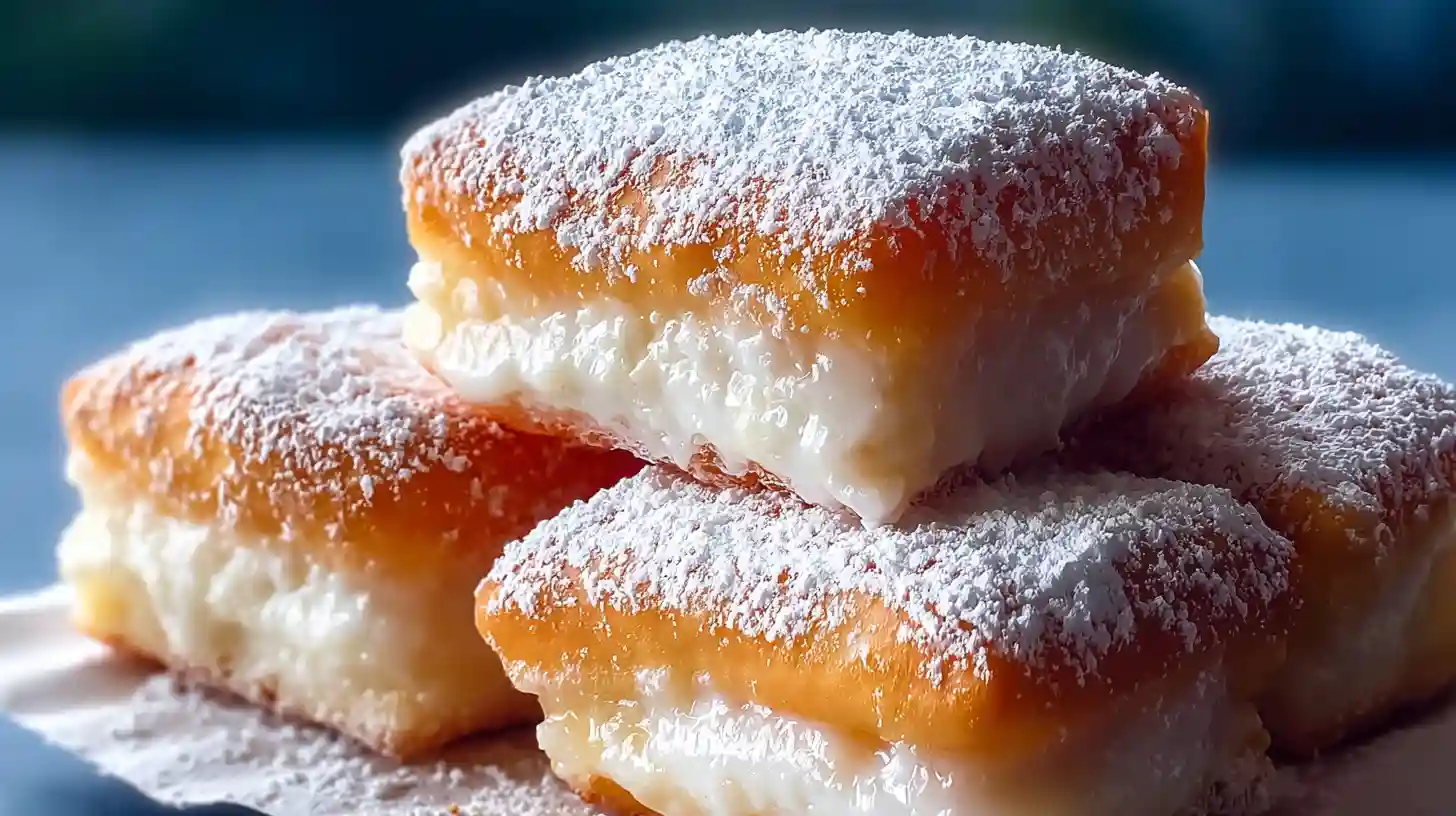
The texture lands somewhere between a doughnut and a fried pillow, crisp on the outside and soft enough in the middle that the glaze soaks in slightly at the edges. These are not difficult to make, but a few details matter, and getting them right is what separates a good beignet from a great one.
Ingredients for Buttermilk Beignet Square
This is a yeast-leavened dough, which gives it that characteristic chew and rise. The buttermilk replaces plain milk and adds both tenderness and a subtle flavor depth that makes these stand out as one of the better baking with buttermilk recipes you will try.
- 1 cup warm buttermilk (around 110°F, not hot)
- 2 1/4 teaspoons active dry yeast (one standard packet)
- 3 tablespoons granulated sugar, divided
- 2 1/2 cups all-purpose flour, plus more for dusting
- 1/2 teaspoon salt
- 1/4 teaspoon baking soda
- 2 tablespoons unsalted butter, melted and cooled
- 1 large egg, room temperature
- Vegetable oil for frying (enough to fill pot 3 inches deep)
- 1 1/2 cups powdered sugar
- 3 to 4 tablespoons whole milk or water for the glaze
- 1/2 teaspoon vanilla extract for the glaze
About the Yeast
Active dry yeast needs to be proofed before mixing into the dough. Stir it into the warm buttermilk with one tablespoon of the sugar and wait about 8 minutes. If it foams and bubbles, it is alive and ready. If nothing happens, the yeast is old and the dough will not rise properly. This is one of the foundational steps in recipes with yeast baking, and skipping the proof is one of the most common mistakes.
Making the Buttermilk Beignet Square Dough and Frying
- In a small bowl, combine warm buttermilk, yeast, and 1 tablespoon sugar. Let sit for 8 minutes until foamy.
- In a large mixing bowl, whisk together flour, remaining sugar, salt, and baking soda.
- Add the yeast mixture, melted butter, and egg to the dry ingredients. Stir until a shaggy dough forms, then turn out onto a lightly floured surface and knead for about 4 minutes until smooth and slightly tacky.
- Place dough in a lightly oiled bowl, cover with a clean towel, and let rise in a warm spot for 1 hour or until doubled.
- Punch the dough down gently and roll out on a floured surface to about 1/2 inch thickness.
- Cut into 2-inch squares using a sharp knife or bench scraper. Re-roll scraps once to use remaining dough.
- Heat oil in a heavy pot to 370°F. Fry beignets in small batches, 3 to 4 at a time, for about 1 minute per side until deep golden brown.
- Remove with a slotted spoon and drain on a paper towel-lined rack.
- Whisk powdered sugar, milk or water, and vanilla together until smooth to make the pastry glaze. Drizzle or dip while beignets are still warm.
Swaps When You Are Missing an Ingredient
No buttermilk in the fridge? You can make a quick substitute by adding one tablespoon of white vinegar or lemon juice to one cup of regular milk, stirring it briefly, and letting it sit for five minutes. It is one of those practical baking recipes without milk alternatives that genuinely works in fried dough. The slight acidity activates the baking soda and keeps the texture light.
Instant yeast can replace active dry yeast at the same quantity – just skip the proofing step and add it directly to the dry ingredients. The rise time may be slightly shorter, so check the dough at the 45-minute mark.
Tips That Make a Real Difference
- Keep the oil temperature steady at 370°F. Too low and the beignets absorb grease. Too high and the outside browns before the inside cooks through. A thermometer is not optional here.
- Do not crowd the pot. Frying too many at once drops the oil temperature and leads to dense, oily results.
- Roll the dough to an even 1/2 inch. Thinner squares puff less, thicker ones can come out doughy in the center.
- Glaze while warm, not hot. Glazed beignets fresh from the oil will melt the coating right off. Give them two minutes on the rack first.
- These are best within an hour of frying. The crispness fades as they sit.
Variations Worth Trying
For a classic glazed beignets finish, skip the drizzle and toss the warm squares directly in a bowl of powdered sugar instead. It coats every surface and gives that cafe-style look. If you want a flavored glaze, add a teaspoon of cinnamon to the powdered sugar mix, or swap the vanilla for almond extract for a slightly different flavor profile.
You can also fill the squares after frying by cutting a small slit into one side and piping in pastry cream or fruit jam. It turns this into more of a filled pastry, closer to a yeast recipes baking desserts style treat. A chocolate dip instead of white glaze works well too, especially when serving these as a dessert platter.
Storage Without Losing Texture
Fried beignets do not store particularly well once glazed. If you want to make them ahead, fry and cool completely without glazing, then store in an airtight container at room temperature for up to one day. Reheat in an air fryer at 350°F for 2 to 3 minutes, then glaze immediately before serving.
The uncooked dough can be refrigerated overnight after the first rise. Press it down, cover tightly, and refrigerate. The next morning, bring it to room temperature for 30 minutes before rolling and frying. This makes the process much more manageable as one of the more flexible recipes with buttermilk baking.
FAQ
Can I bake these instead of frying? You can, but they will not have the same crispy exterior or puffed texture. Bake at 375°F for 12 to 14 minutes until golden if you want a lighter version. They will taste more like a soft roll than a traditional beignet.
Why did my beignets come out flat? Usually this means the yeast was not active, the oil was too hot and the outside set too fast, or the dough was rolled too thin. Check the yeast proof step first, as that is the most common cause.
Do I need a deep fryer? No. A heavy-bottomed pot like a Dutch oven works well and holds the oil temperature more steadily than a thin pan. Fill it with at least 3 inches of oil so the beignets can float freely.
What is the best beignet recipe tip for beginners? Use a thermometer for the oil and do a test fry with one square before doing a full batch. This tells you if the temperature is right and gives you a feel for the timing before committing to all of them.
Can the dough be frozen? Yes. After shaping the squares, place them on a parchment-lined tray, freeze until solid, then transfer to a freezer bag. Fry from frozen, adding about 30 to 45 seconds to each side. Do not thaw first or they will become sticky and hard to handle.
How thick should the pastry glaze be? It should coat the back of a spoon without dripping off instantly. If it is too thin, add more powdered sugar one tablespoon at a time. If it is too thick to drizzle, add milk or water by the teaspoon until it loosens slightly.
Buttermilk Beignet Square
Ingredients
Equipment
Method
- Proof the yeast in warm buttermilk with 1 tablespoon sugar for 8 minutes until foamy.
- Whisk flour, remaining sugar, salt, and baking soda together in a large bowl.
- Add yeast mixture, melted butter, and egg to the dry ingredients. Knead on a floured surface for 4 minutes until smooth.
- Rise covered in a warm spot for 1 hour until doubled in size.
- Roll dough to 1/2 inch thickness and cut into 2-inch squares.
- Fry in batches in 370°F oil for about 1 minute per side until deep golden. Drain on a paper towel-lined rack.
- Glaze by whisking powdered sugar, milk, and vanilla. Drizzle over warm beignets before serving.
Notes
- Always proof yeast before mixing – if it does not foam the dough will not rise.
- Keep oil at 370°F throughout frying for even results.
- Glaze after 2 minutes of cooling, not immediately from the oil.
- Uncooked shaped squares can be frozen and fried straight from frozen.


